Welcome to the ultimate guide on system boards—your computer’s beating heart. Whether you’re a tech newbie or a seasoned builder, understanding the system board is key to unlocking peak performance, seamless upgrades, and long-term reliability.





What Is a System Board? The Core of Every Computer

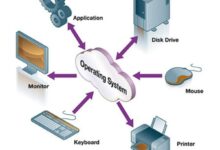
The term system board might sound technical, but it’s actually the backbone of any computing device. Also commonly known as the motherboard, the system board is the primary printed circuit board (PCB) in computers and other complex electronic systems. It connects all essential components—CPU, RAM, storage, GPU, and peripherals—into a unified, functional unit.
Definition and Basic Function
A system board serves as the central hub that allows communication between the various hardware components of a computer. Without it, individual parts like the processor or memory would be isolated and unable to function together. It provides both physical support and electrical connections through traces—thin copper pathways etched onto the board.
- Acts as the main circuit board in a computer system
- Enables data transfer between CPU, RAM, GPU, and storage
- Supplies power to components via the power supply unit (PSU)
Common Synonyms: Motherboard, Mainboard, Logic Board
While “system board” is the technically accurate term used in engineering and enterprise environments, it’s often referred to as a motherboard in consumer contexts. Other names include mainboard (common in European documentation) and logic board (used by Apple for MacBooks and iMacs). Despite the different names, they all describe the same critical component.
“The system board is to a computer what the central nervous system is to the human body—it integrates, coordinates, and enables all functions.” — Dr. Elena Torres, Hardware Systems Engineer
Historical Evolution of the System Board
The concept of a central circuit board dates back to the 1960s with early mainframes, but the modern system board emerged in the 1980s with the IBM PC. Since then, it has evolved from simple boards with limited slots to highly integrated platforms supporting high-speed data transfer, onboard graphics, Wi-Fi, and AI acceleration.
- 1981: IBM introduces the first PC with a standardized motherboard
- 1990s: Introduction of ATX form factor by Intel, improving airflow and layout
- 2000s: Integration of audio, LAN, and USB directly onto the board
- 2020s: Support for PCIe 5.0, DDR5 RAM, and AI-ready chipsets
Key Components of a System Board
To truly understand how a system board works, you need to know its major components. Each part plays a vital role in ensuring your computer runs smoothly, efficiently, and reliably.
CPU Socket: The Brain’s Home
The CPU socket is where the processor is installed. It’s designed to match specific processor families—Intel uses LGA (Land Grid Array), while AMD uses PGA (Pin Grid Array) or LGA variants. The socket type determines which CPUs are compatible with the system board.
- LGA1700 for Intel 12th–14th Gen Core processors
- AM5 for AMD Ryzen 7000 series and beyond
- Socket compatibility is non-negotiable—always check before upgrading
For more details on CPU sockets, visit Intel’s official CPU compatibility guide.
RAM Slots: Memory Highway
Random Access Memory (RAM) slots allow you to install memory modules that the CPU uses for temporary data storage. Most modern system boards have 2 to 4 DIMM slots supporting DDR4 or DDR5 technology. The number of slots and supported speed directly affect multitasking performance and application responsiveness.
- DDR5 offers up to 50% more bandwidth than DDR4
- Dual-channel configuration doubles memory throughput
- Maximum supported RAM varies by chipset and board design
Chipset: The Traffic Controller
The chipset is a crucial integrated circuit that manages data flow between the CPU, memory, storage, and peripherals. It acts as a middle manager, deciding which components get priority and how data moves across the system board. Chipsets are specific to CPU brands and generations.
- Intel chipsets: Z790, B760, H610 (for 13th/14th Gen)
- AMD chipsets: X670, B650, A620 (for AM5 platform)
- Higher-tier chipsets support overclocking, more PCIe lanes, and faster storage
Learn more about chipset differences at AMD’s chipset support page.
Types of System Boards: From Desktops to Servers
Not all system boards are created equal. They come in various sizes, configurations, and capabilities depending on their intended use—be it gaming, office work, or enterprise computing.
ATX: The Standard Workhorse
Advanced Technology eXtended (ATX) is the most common form factor for desktop system boards. Measuring 12 x 9.6 inches (305 x 244 mm), ATX boards offer a balanced mix of expansion slots, RAM capacity, and cooling options. They’re ideal for mid-tower and full-tower builds.
- Typically has 4 RAM slots and 3–4 PCIe x16 slots
- Supports high-end GPUs and multi-drive setups
- Widely available and cost-effective
Micro-ATX: Compact Yet Capable
Measuring 9.6 x 9.6 inches (244 x 244 mm), Micro-ATX (mATX) system boards are smaller than ATX but retain many of the same features. They’re perfect for budget builds or compact cases where space is limited.
- Usually has 2–4 RAM slots and 1–2 PCIe slots
- Compatible with ATX power supplies and cases
- Slight reduction in expandability compared to full ATX
Mini-ITX: The Tiny Powerhouse
At just 6.7 x 6.7 inches (170 x 170 mm), Mini-ITX system boards are designed for small form factor (SFF) PCs. Despite their size, modern Mini-ITX boards can support high-end CPUs and GPUs, making them popular for HTPCs (Home Theater PCs) and portable rigs.
- Limited to 1 PCIe slot and 2 RAM slots
- Higher cost per feature due to miniaturization
- Requires careful thermal management
“Mini-ITX proves that power doesn’t need to come in big packages. With the right cooling and components, it can outperform many full-sized systems.” — Linus Sebastian, Tech Reviewer
How a System Board Works: The Communication Backbone
The magic of a system board lies in how it enables seamless communication between components. It’s not just a static platform—it’s a dynamic network of electrical pathways and intelligent controllers.
Data Pathways: Buses and Traces
On a system board, data travels through conductive copper traces that act as highways. These pathways are grouped into buses—dedicated channels for specific types of data. Key buses include:
- Front Side Bus (FSB): Older systems used this to connect CPU and northbridge (now obsolete)
- PCI Express (PCIe): High-speed serial bus for GPUs, NVMe SSDs, and expansion cards
- DMI (Direct Media Interface): Connects CPU to the chipset on Intel platforms
- Infinity Fabric: AMD’s interconnect linking CPU cores and I/O die
Power Delivery: VRMs and Phases
Voltage Regulator Modules (VRMs) are critical for delivering clean, stable power to the CPU and other components. A VRM consists of phases—each phase includes MOSFETs, inductors, and capacitors. More phases mean better power efficiency and thermal performance, especially under load.
- Entry-level boards: 4+1 or 6+1 phase VRMs
- High-end boards: 12+2 or 16+1 phase designs
- Overclocking requires robust VRMs to prevent throttling
BIOS/UEFI: The Board’s Firmware
The Basic Input/Output System (BIOS) or its modern successor, Unified Extensible Firmware Interface (UEFI), is embedded software stored on a chip on the system board. It initializes hardware during boot-up and provides a configuration interface for settings like boot order, CPU frequency, and memory timing.
- UEFI supports mouse navigation, secure boot, and larger drive support
- Firmware updates can improve stability, add CPU support, or fix bugs
- Accessed by pressing Del, F2, or F12 during startup
For a deep dive into UEFI, check out UEFI.org’s official specifications.
Choosing the Right System Board: A Buyer’s Guide
Selecting the right system board can make or break your build. It’s not just about compatibility—it’s about future-proofing, performance, and value.
Compatibility: CPU, RAM, and Case
The first rule of choosing a system board is ensuring compatibility with your CPU, RAM, and case. A mismatch here can lead to costly mistakes.
- Intel LGA1700 CPUs only work with 600/700-series boards
- AMD AM5 boards support DDR5 only—no DDR4 option
- Check case specifications for supported form factors (ATX, mATX, ITX)
Features: Wi-Fi, Bluetooth, and Audio
Modern system boards often come with integrated features that eliminate the need for add-on cards. These include:
- Wi-Fi 6E and Bluetooth 5.3 for wireless connectivity
- High-definition audio codecs (e.g., Realtek ALC4080)
- Multiple USB ports, including USB-C with 20Gbps speeds
- 2.5Gb or 10Gb Ethernet for fast networking
Budget vs. Performance: Finding the Sweet Spot
You don’t always need the most expensive board. For a balanced build, consider:
- Budget builds: B660 (Intel) or B650 (AMD) boards offer great value
- Gaming rigs: Z790 or X670E for overclocking and PCIe 5.0 support
- Workstations: Boards with ECC memory support and multiple PCIe slots
PCPartPicker is a great tool to ensure compatibility—visit PCPartPicker.com to plan your build.
Common System Board Issues and Troubleshooting
Even the best system boards can encounter problems. Recognizing symptoms early can save time, money, and frustration.
Failure Symptoms: No Power, Beep Codes, and Crashes
When a system board fails, it often manifests in clear ways:
- No power: No lights, fans, or POST (Power-On Self-Test)
- Beep codes: Audio signals indicating hardware faults (e.g., 1 long, 2 short = video error)
- Random crashes or reboots under load
- USB or SATA ports stop working
Diagnosis: Is It the Board or Something Else?
Before replacing the system board, rule out other components:
- Test with a known-good power supply
- Try minimal boot: CPU, one RAM stick, integrated GPU
- Check for physical damage—burnt capacitors, bulging components
- Use a POST tester or motherboard speaker for diagnostics
Prevention: Surge Protection and Proper Cooling
Most system board failures are preventable:
- Use a surge protector or UPS to guard against power spikes
- Ensure proper case airflow to prevent overheating
- Avoid overclocking beyond safe limits without adequate cooling
- Keep firmware updated to patch security and stability issues
Future of System Boards: Trends and Innovations
The system board is evolving rapidly, driven by AI, quantum computing, and edge devices. What’s next for this critical component?
Integration of AI and Machine Learning
Modern system boards are beginning to incorporate AI-driven features:
- AI overclocking (e.g., ASUS AI Overclocking)
- Smart fan control based on thermal learning
- Workload optimization for gaming, rendering, or productivity
Modular and Repairable Designs
With growing concerns about e-waste, companies are exploring modular system boards:
- Replaceable VRM or chipset modules
- Standardized connectors for easier upgrades
- Right-to-repair initiatives pushing for accessible designs
Quantum and Optical Interconnects
While still in research, future system boards may use:
- Optical data transfer for ultra-low latency
- Quantum tunneling circuits for higher efficiency
- 3D-stacked components to reduce footprint
For insights into next-gen computing, see IBM’s Quantum Research.
System Board in Laptops and Mobile Devices
Unlike desktops, laptops use highly integrated system boards where components are often soldered in place. This reduces size and power consumption but limits upgradeability.
Design Constraints: Size and Power Efficiency
Laptop system boards must balance performance with thermal and spatial limits:
- CPU and GPU often on a single package (e.g., Intel Core with Iris Xe)
- RAM frequently soldered, limiting upgrades
- Passive cooling and heat pipes replace large fans
Repairability Challenges
Due to dense integration, repairing laptop system boards is complex:
- Requires micro-soldering skills for component replacement
- Damage to one area (e.g., power circuit) can disable the whole board
- Cost of repair often exceeds replacement value
Apple’s M-Series and the Shift to Custom Silicon
Apple’s transition to M1, M2, and M3 chips represents a radical shift:
- Entire system-on-a-chip (SoC) integrated onto a tiny board
- Unprecedented power efficiency and performance per watt
- Minimal upgrade paths—buy what you need upfront
“Apple’s system board design is a masterclass in integration. They’ve turned a complex motherboard into a single, efficient module.” — Anand Lal Shimpi, AnandTech
Industrial and Embedded System Boards
Beyond consumer devices, system boards are vital in industrial automation, medical devices, and transportation systems.
Ruggedized Designs for Harsh Environments
Industrial system boards are built to withstand extreme conditions:
- Wide temperature tolerance (-40°C to 85°C)
- Vibration and shock resistance
- Conformal coating to prevent moisture damage
Long-Term Availability and Support
Unlike consumer boards, industrial system boards are designed for longevity:
- Available for 10+ years to support legacy systems
- Backward-compatible interfaces for easy upgrades
- Dedicated technical support and firmware updates
Applications in IoT and Edge Computing
Embedded system boards power smart devices at the network edge:
- Smart sensors, traffic controllers, and medical monitors
- Low-power ARM-based boards like Raspberry Pi Compute Module
- Real-time operating systems (RTOS) for deterministic performance
Explore industrial solutions at Advantech’s product line.
What is a system board?
A system board, also known as a motherboard, is the main circuit board in a computer that connects and enables communication between all hardware components, including the CPU, RAM, storage, and peripherals.
What’s the difference between a system board and a motherboard?
There is no functional difference. “System board” is the technical term used in engineering and enterprise contexts, while “motherboard” is the common consumer term. Both refer to the same component.
Can I upgrade my system board?
Yes, but it requires careful planning. You must ensure compatibility with your CPU, RAM, case, and power supply. Upgrading the system board often means upgrading other components as well.
How do I know if my system board is failing?
Signs include no power, beep codes during boot, random crashes, or malfunctioning ports. Diagnose by testing with known-good components and checking for physical damage.
Do laptops have system boards?
Yes, laptops have system boards, but they are highly integrated with components often soldered in place, making upgrades and repairs more difficult than in desktops.
Understanding the system board is essential for anyone working with computers, from casual users to IT professionals. It’s the foundation upon which all computing power is built. From its role in data transfer and power delivery to its evolution in laptops and industrial systems, the system board remains a marvel of modern engineering. As technology advances, we can expect even smarter, more efficient, and more integrated designs that push the boundaries of what computers can do. Whether you’re building a PC, troubleshooting a failure, or exploring future trends, the system board will always be at the heart of the digital world.
Further Reading: